
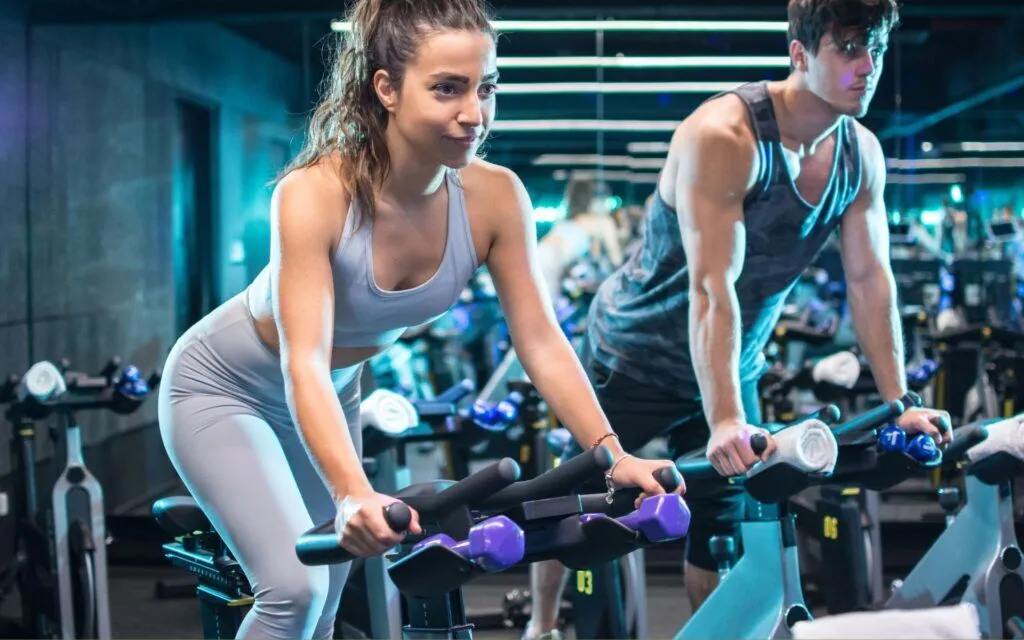
The most significant technological transition occurring in Singapore’s indoor cycling studio landscape is the shift from motivational class delivery, where intensity is guided primarily by instructor energy and music, toward data-informed delivery where individual power output metrics create a personalised intensity experience within a shared class environment. This transition is changing both what Singapore cyclists experience during indoor cycling singapore classes and what physiological outcomes they achieve from consistent participation.
The Architecture of Connected Cycling in Singapore Studios
Connected cycling technology in Singapore’s premium studios creates a data layer that sits between individual cyclists and the class delivery system, feeding individual performance information upward to instructors and downward to each participant’s personal display.
Bike-Integrated Power Measurement
Modern studio cycling bikes equipped with power meters measure the force applied to the pedals and the velocity of pedal rotation, combining these measurements to calculate instantaneous power output in watts. This data is accurate, immediate, and directly reflects the mechanical work being performed, unlike heart rate which has an inherent physiological lag between effort change and heart rate response.
The power meter data is transmitted wirelessly from each bike to the studio’s class management system, where it is displayed on individual console screens and, in studios with broadcast display capability, aggregated into class-wide performance visualisations that instructors use to monitor and manage overall class intensity distribution in real time.
Individualised Intensity Targeting
The commercially and physiologically significant capability that connected cycling data enables is individualised intensity targeting within a group class format. Rather than all participants receiving the same absolute wattage target, a connected cycling system can display each participant’s target as a percentage of their individual functional threshold power, ensuring that the prescribed intensity represents the same relative physiological challenge for the highly trained cyclist and the recreational participant in the same class.
This individualisation is the primary argument for power-based over heart-rate-based class delivery: two participants with the same heart rate target are not necessarily experiencing the same physiological challenge, because their cardiovascular systems have different efficiencies at producing the same heart rate. Two participants at the same percentage of their individual functional threshold power are experiencing equivalent physiological challenge regardless of the different absolute wattages they produce.
Longitudinal Performance Tracking Through Connected Systems
Connected cycling platforms that retain individual session data across multiple visits provide Singapore cyclists with longitudinal performance tracking that reveals adaptation trends undetectable from any individual session.
A cyclist whose average power output across comparable interval sessions has increased by fifteen percent over three months of consistent training has objective evidence of meaningful cardiovascular and muscular development that subjective experience cannot quantify with equivalent precision. This longitudinal data provides the motivation of visible progress in terms that are more specific and credible than general fitness improvement claims.
True Fitness Singapore develops its indoor cycling technology infrastructure with both the technical quality and the coaching integration that make connected cycling data a practical training enhancement rather than a technological addition that complicates rather than improves the class experience. True Fitness Singapore positions its cycling programme at the intersection of technology and human coaching expertise where the best cycling performance outcomes are produced.
FAQs
Q. – How does connected cycling technology actually improve my training compared to a standard indoor cycling class?
Ans. – Connected cycling enables accurate pacing, individualised intensity targeting, and longitudinal progress tracking that are not achievable through subjective effort management. The most immediate practical benefit is pacing accuracy: being able to see your current wattage relative to your individual target eliminates the guesswork that produces interval pacing errors in non-connected classes.
Q. – My Singapore cycling studio has connected bikes but the instructors rarely reference power data during class. Am I losing the technology’s benefit?
Ans. – You retain the individual benefits of seeing your own power data on the bike console regardless of whether the instructor actively uses the class-level data in their delivery. Using your personal console display to manage your own intensity relative to your threshold targets independently captures the primary performance benefit of the technology.
Q. – How do I get my functional threshold power established in Singapore for use in connected cycling classes?
Ans. – Ask your indoor cycling studio whether they offer functional threshold power testing sessions or whether their instructors can guide you through a self-administered test during an open studio period. Some Singapore gyms include this testing in their premium membership onboarding assessments.
Q. – Will connected cycling data from Singapore studios eventually integrate with outdoor cycling platforms?
Ans. – Several connected cycling platforms used in Singapore studios already provide data export compatible with popular outdoor cycling training platforms. This integration allows Singapore cyclists who train both indoors and outdoors to maintain unified performance records that support consistent training programme management across both environments.
Q. – Is connected cycling technology available at all Singapore indoor cycling studios or only premium facilities?
Ans. – Power-metered bikes with connected display capability are currently concentrated in Singapore’s premium gym and dedicated cycling studio tier. Mid-tier facilities typically offer bikes with basic cadence and resistance displays but without power measurement. The technology gap between premium and standard indoor cycling provision in Singapore is most apparent in this data infrastructure dimension.